

Slender-horned Gazelle
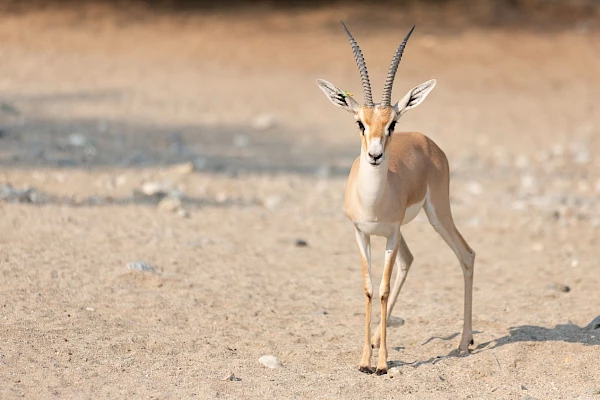
This gazelle is a true desert animal, always on the move with a small herd, preyed on in the wild by lions and jackals. It displays the nervous vigilance typical of a prey animal, signaling alarm with a snort or flick of the tail, warning the herd to flee.
It is small, measuring 28″ at the shoulder, and is a pale sandy color above with white below to blend with the sands, a very faint flank stripe and splayed hooves which increase foot surface for walking through deep and extensive stretches of sand. The 15″ long horns are ringed and only slightly curved. It has large, dark eyes and long ears. Its diet consists of leaves, grass and any other vegetation available.
Mating occurs in fall and young, often twins are born after a 5-month gestation and can walk within minutes. Mother hides them in the shrubbery, snorting at them when she is ready to nurse.
As a ruminant, a gazelle swallows its food unchewed, which allows it to consume large quantities of hard-to-digest plant material at one feeding, then to rest in a safe place to chew its cud. It can go long periods without water, getting most of its water from the vegetation consumed.
Springbok
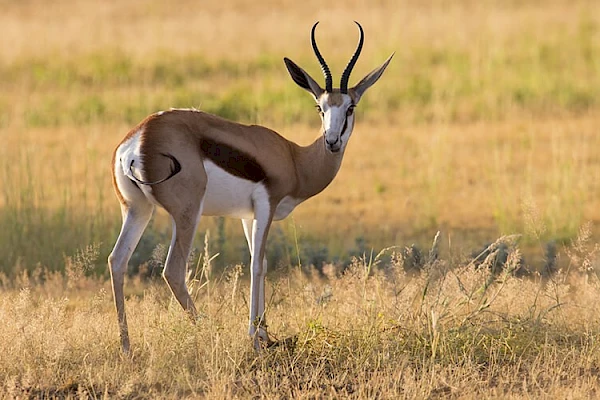
Springbok are known for their pronking ability, in which they spring into the air lifting all four feet at the same time. Although closely related to gazelle, springbok have a unique structure and white patch of hair on its back that is displayed when excited or pronking. Springbok are the most abundant plains antelope, and have been documented to run at speeds of 55mph. Threats: Predators include cheetah and wild dogs.
Bat-Eared Fox
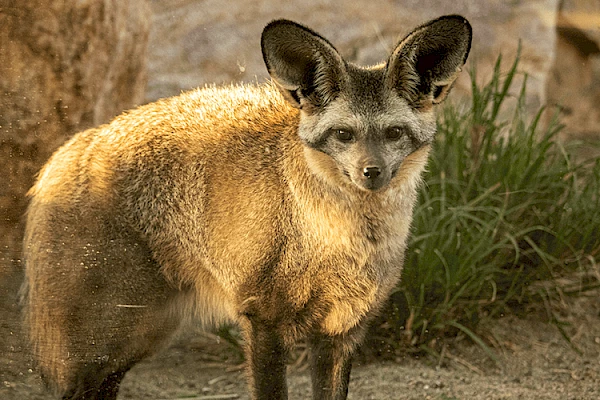
Their coats are yellowish-brown with brown feet and ear tips and blackish brown faces. Their legs are relatively short, and tails bushy, darkening in color towards the tip and their ears are approximately 5 inches long.
They are the only canids that prefer insects to mammalian prey. Eighty percent of their diet consists of insects, particularly harvester termites and dung beetles, as well as fruits, scorpions and an occasional small mammal or bird. They are hunted by native peoples for their pelts and meat and also by carnivores such as the black-backed jackal, slender mongoose and brown hyena.
Bat-eared foxes usually breed in pairs, giving birth in self-dug dens. But single males may breed with two females and two or three breeding dens may be clustered within a few hundred meters, where soil and vegetation are suitable. After a 60-70 day gestation period, two to five pups are born. Juveniles achieve adult size at 4 months, when they begin to accompany adults on foraging trips. Groups can include up to 12 foxes.
Banded Mongoose

Although dwarf and banded mongoose are cousins with similar traits, these African animals have unique characteristics all their own.
Arabian Oryx
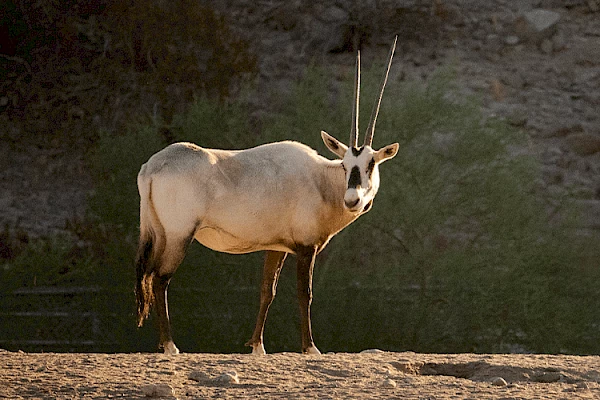
One of the grazing antelopes, this smallest oryx has a white body with black markings on the face and legs. Their horns, which measure up to 2 1/2 feet long, are nearly straight and their hooves are splayed and shovel-like.
They eat whatever vegetation is available, feeding mainly at night when it is most succulent. They do not need to drink free water, getting their moisture from plants and occasionally digging hollows under rocks and bushes with horns and hooves for shade. Before becoming extinct in the wild, they were preyed upon by Striped Hyenas, Arabian Wolves, Lions, and Bedouins. Herds usually consist of 10 to 20 animals, with one dominant male mating with the females.
As true desert specialists, they survive through several adaptations, such as remaining in the shade during the daytime; excavating scrapes in shady ground and lying down to offload body heat to the cooler sand and reduce body surface exposed to drying winds. Their temperatures can rise to 113F without ill effects and no valuable water is wasted by sweating or panting. Oryx may travel 10 to 20 miles at night to new feeding areas.
Warthog
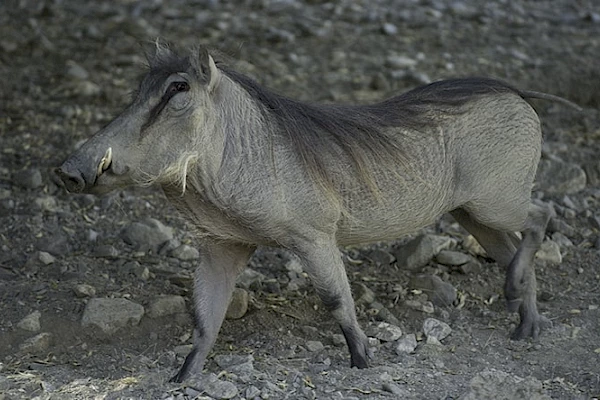
Warthogs are grey with sparse, bristly hair, a long mane, a tail tuft and a large head with facial warts, more pronounced in males, which provide protection from the tusks of opponents. Small eyes set high in the head allow them to see over grass when kneeling to graze. Their sense of smell and hearing are good but they have poor eyesight. Warthogs have relatively long legs, which allow them to run faster than most pigs.
Warthogs pluck grass with incisors or lips, using their tough snouts to dig up rhizomes, tubers and insect larvae when savanna soils are dry.
Warthogs live in burrows, often abandoned aardvark burrows and when threatened, they run to the nearest burrow, backing into it on the run, to present their sharp lower tusks to the predator. This gives them protection from most predators other than lions and leopards.
Gestation is approximately 6 months with piglets–generally 2-4 per litter–being weaned at 4 months. Newborns remain in the burrow for about 2 weeks where temperature and humidity are relatively constant and remain close to the burrow for several more weeks before joining the matriarchal group which shares feeding grounds, water holes, wallows, resting sites and sleeping dens. Males are solitary or part of a bachelor group.
Waterbuck
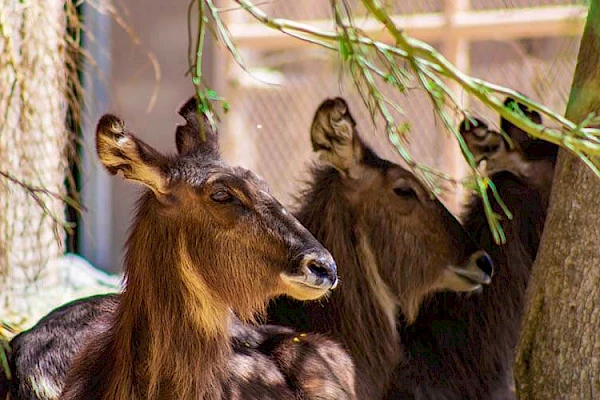
Waterbuck are highly dependent on water. They must drink daily and only inhabit areas that are adjacent to water sources. They are excellent swimmers and readily wade into water to seek refuge from predators. Waterbuck herds are led by one male and several females. Only males have they impressive forward-curving horns. Threats: Habitat loss
African Painted Dog
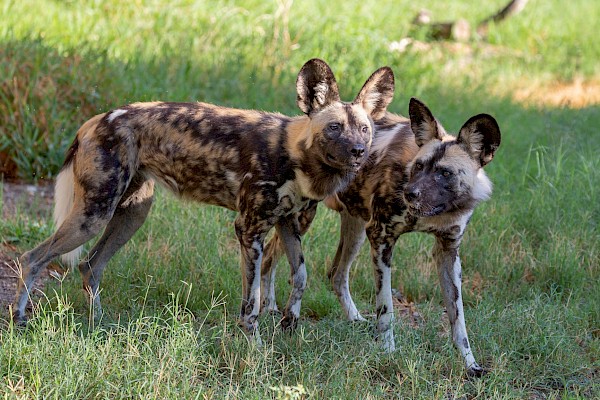
African wild dogs are pack animals. Females leave the pack when mature and males typically stay with their pack.
Their unique coat patterns, specialize pack communication and teamwork have made them one of the most successful hunters in all of Africa, with a 70%-90% rate of success.
African wild dogs are threatened mainly by habitat loss, which has led to human-wildlife conflict. Wild dogs are also susceptible to diseases carried by domestic dogs, such as distemper and parvovirus. The Living Desert actively supports African wild dog conservation efforts through the Painted Dog Conservation organization.
Addax
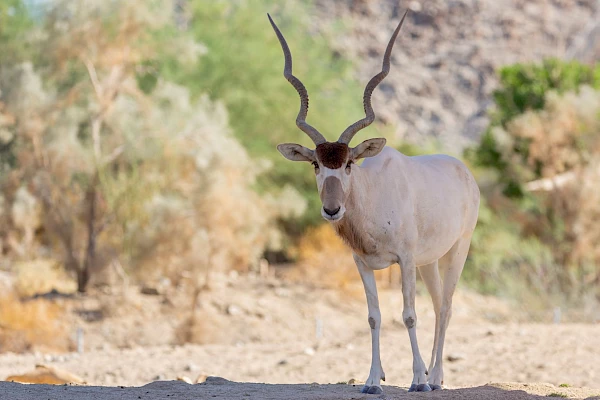
Heavily built with short legs and long spiraled horns on both sexes. Coat color is white in summer, darkening gradually in winter. On the forehead is a tuft of dense black hair which resembles a toupe’. A band of white hair forms an “X” across the nose.
They are most active from dusk until dawn. Superbly adapted to desert conditions and can go most of their lives without drinking water. They get moisture from plants and the dew which collects on them during evening and early morning. Their light color helps to deflect heat from sun; their broad, flat hooves facilitate travel on desert sands. Daily variation in body temperature reduces the need for evaporative cooling, thus conserving water.