


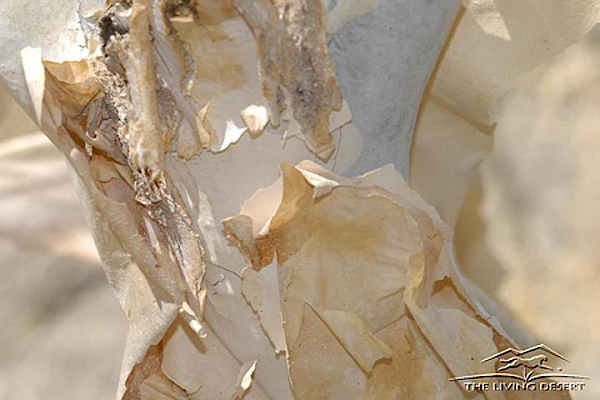
Palo Blanco
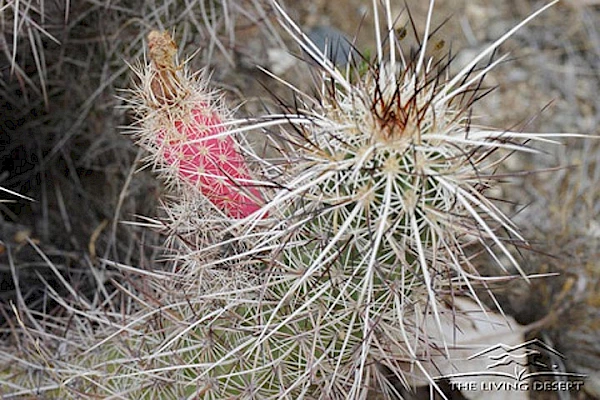
Calico Hedgehog, Strawberry Hedgehog
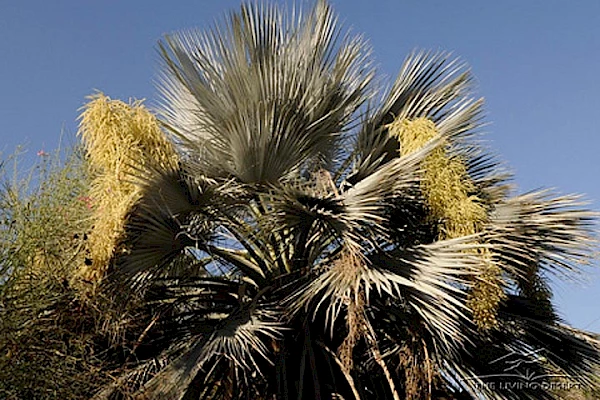
Mexican Blue Palm, Blue Hesper Palm
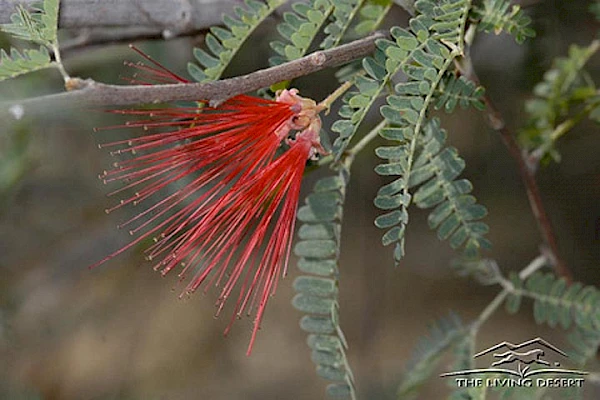
Baja Fairy Duster
American Badger
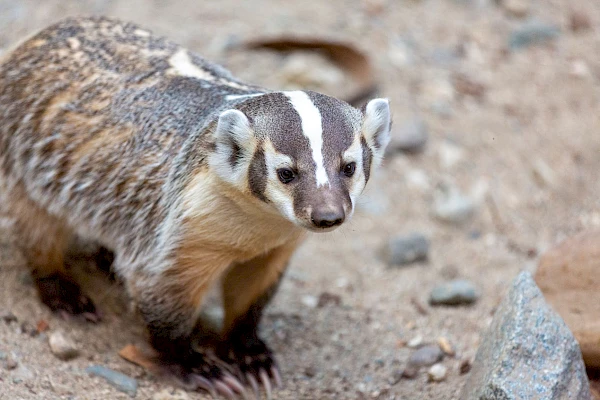
Badgers are large, from 25-30″ in length, and weigh from 15-25 lbs. Their fur is long and grayish, with a white dorsal stripe extending from nose to rump, black patches on their face, a short tail and small rounded ears. Their claws are long and sharp.
Nocturnal, elusive and seldom-seen, the badger has several sleeping dens within its territory. These burrows give shelter to other wildlife but can be hazardous to livestock, and ranchers sometimes kill them for this reason. They are also killed by poison bait put out for coyotes and by eating poisoned rodents, even though they benefit man as rodent control.
They hunt mainly burrowing rodents but also other small animals and sometimes carrion. They have few predators. Badgers are fierce fighters, able to drive off an attacker many times their own size.
Badgers are solitary all year until mating season in late summer or early fall. 1-5 babies are born blind in a large dry-grass-lined burrow in spring. The young remain in the burrow for 5-6 weeks, leaving at the end of the summer. The father takes no part in raising them.
The badger’s period of winter inactivity (not true hibernation) coincides with that of the ground squirrel, its favorite food.
Island Fox
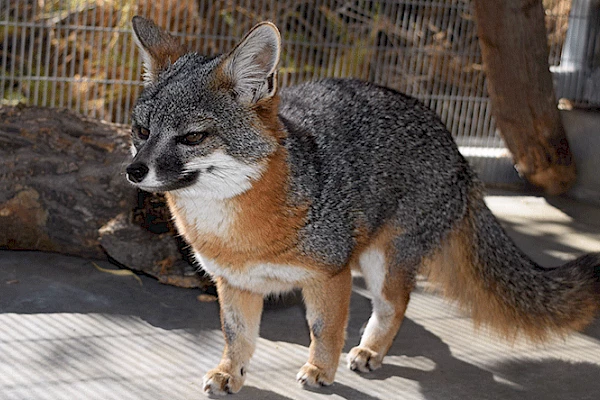
The smallest North American canid found only on California’s Channel Islands is a descendant of the mainland gray fox (Urocyon cinereoargenteus), the island fox evolved into a unique species over 7,000 years ago, retaining similar markings to its ancestor but evolving to be just two-thirds of the size. The coat of the island fox is a grizzled mix of greyish-white and black, while the underside is a dull white. The ears, neck and the sides of the legs are usually cinnamon- colored and the chin, borders of the lips and the area between the eyes and nose are black. The tail has a well-defined, black, narrow stripe along the top.
Island foxes are thought to have evolved in the three largest northern Channel Islands and were moved to the three largest southern Channel Islands by the Chumash native people who traded with the Gabrielino people of the southern islands. The Chumash considered the fox to be a sacred animal–a pet of the sun, and possibly a dream helper. The Island Chumash performed a fox dance and probably used the pelts of foxes to make articles like arrow quivers, capes, and headdresses.
In the 12 years (2004 -2016) since it was listed as an endangered species quick and effective actions have taken place to facilitate their recovery. The key efforts which contributed to this recovery included: captive breeding and reintroduction of island foxes, capture and relocation of golden eagles, vaccination of foxes against distemper, and larger ecosystem recovery actions of bald eagle restoration and nonnative ungulate removal (pigs, deer and elk).
Jaguar
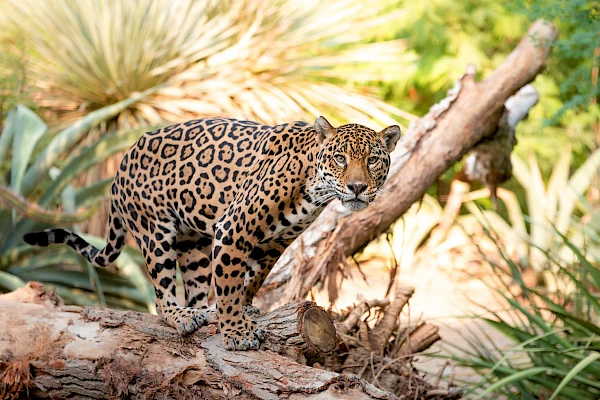
Jaguars come in many sizes and colors with spots on the head, neck and legs, and rosettes on the rest of the body. The overall coat of a jaguar is typically pale yellow, tan, or reddish yellow above, and generally whitish on the throat, belly, insides of the limbs, and underside of the tail, with prominent dark spots or blotches throughout. Each jaguar’s marking are different, just like our fingerprints. Adults weigh on average 80-250 lbs. They measure about 30 inches at the shoulder and are about six feet long plus a 30-inch tail. Jaguars have a relatively robust head, compact but muscular body, short limbs and tail, and powerfully-built chest and forelegs. Its skin color and patterned coat aid in camouflage. Its long tail helps it balance when running and turning sharply. Jaguars have a large head specially equipped for piercing the skull of their prey with their canines.
Kit Fox
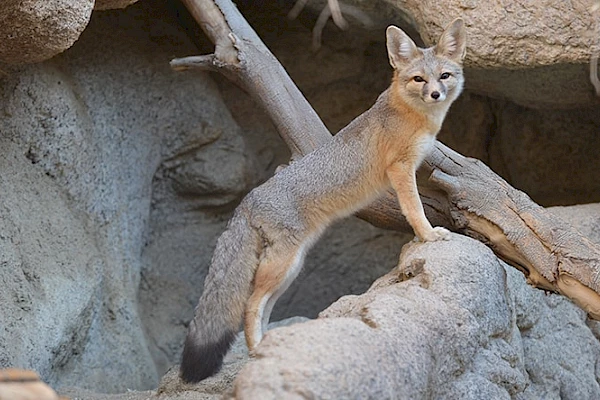
A very small, pale, yellowish colored fox with big ears, pointed nose and long bushy black-tipped tail. Being so small (3-4 lbs.), it is often confused with a coyote pup. Kit fox is about 15-20 inches long, gray fox 20-30 inches. Light sandy color (camouflage), heavily furred feet (for getting about on loose sand), great speed for short distances, agility of a cat combined with keen senses of hearing and smell, all add up to making the kit fox a most capable nocturnal predator on desert dunes. Big ears help to dissipate heat in desert environment.
They like to rework a kangaroo rat burrow or dig its own in the sand, among the roots of a creosote bush or other plants for support. Burrow serves as protection from daytime desert heat and aridity, wind and sandstorms. Burrow provides safety for young. Nocturnal. Active all year, does not hibernate.
Desert Tortoise
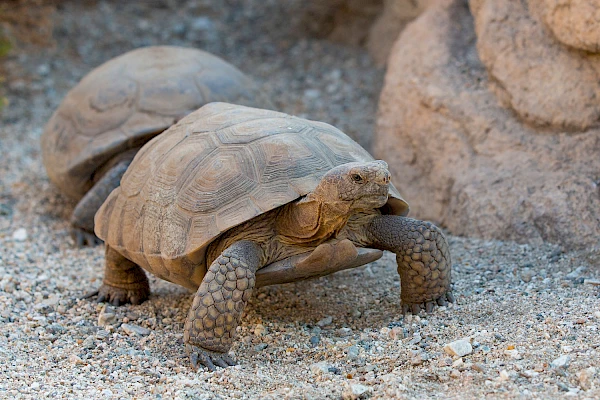
The desert tortoise has roamed the desert’s landscape for tens of thousands of years, escaping scorching temperatures in burrows deep underground.
Tortoises can completely withdraw their head and limbs into their shell, leaving only the horny scales visible to potential predators.
Desert tortoise populations are threatened by raven predation, urbanization, illegal collection for the pet trade, off-highway vehicles, and upper-respiratory tract infections. The Living Desert’s Healthy Desert Education Project, features the Time to Talk Trash campaign, which educates people about how the dramatic rise in raven populations has led to a decrease in tortoise hatchling survival rates.