Today’s Hours: 8:00am – 5:00pm


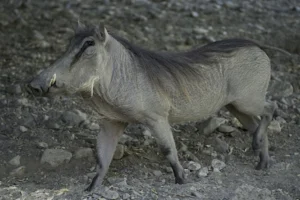
Species Name:Phacochoerus aethiopicus
Warthogs are grey with sparse, bristly hair, a long mane, a tail tuft and a large head with facial warts, more pronounced in males, which provide protection from the tusks of…
Read MoreSuidae, the pig family.
Least Concern, IUCN.
Sub-Saharan Africa, widely distributed in east Africa.
Savannas, open woodlands and plains
Because of moving and feeding on their knees, warthogs develop thick calluses on their wrists.
Warthogs are grey with sparse, bristly hair, a long mane, a tail tuft and a large head with facial warts, more pronounced in males, which provide protection from the tusks of opponents. Small eyes set high in the head allow them to see over grass when kneeling to graze. Their sense of smell and hearing are good but they have poor eyesight. Warthogs have relatively long legs, which allow them to run faster than most pigs.
Warthogs pluck grass with incisors or lips, using their tough snouts to dig up rhizomes, tubers and insect larvae when savanna soils are dry.
Warthogs live in burrows, often abandoned aardvark burrows and when threatened, they run to the nearest burrow, backing into it on the run, to present their sharp lower tusks to the predator. This gives them protection from most predators other than lions and leopards.
Gestation is approximately 6 months with piglets–generally 2-4 per litter–being weaned at 4 months. Newborns remain in the burrow for about 2 weeks where temperature and humidity are relatively constant and remain close to the burrow for several more weeks before joining the matriarchal group which shares feeding grounds, water holes, wallows, resting sites and sleeping dens. Males are solitary or part of a bachelor group.
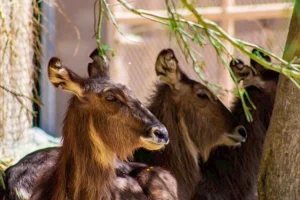
Species Name:Kobus ellipsiprymnus
Waterbuck are highly dependent on water. They must drink daily and only inhabit areas that are adjacent to water sources. They are excellent swimmers and readily wade into water to seek refuge…
Read MoreBovidae
Least concern
Sub-Saharan West Africa, Central and Eastern Africa
Grasslands, savanna, scrub, and woodlands
Waterbuck are highly dependent on water. They must drink daily and only inhabit areas that are adjacent to water sources
Waterbuck are highly dependent on water. They must drink daily and only inhabit areas that are adjacent to water sources. They are excellent swimmers and readily wade into water to seek refuge from predators. Waterbuck herds are led by one male and several females. Only males have they impressive forward-curving horns. Threats: Habitat loss
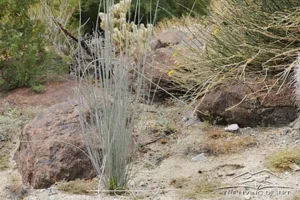
Species Name:Asclepias albicans
Read MoreAsclepiadaceae, Milkweed Family
Sonoran and Mojave Deserts; southeastern California, southwestern Arizona and Baja California, Mexico
Dry slopes and washes, Creosote Bush Scrub
Shrub to 10 feet tall and 4 feet wide
Upper Colorado Garden, Nature Trail
White-stemmed Milkweed possesses a stark beauty, with its pale stems reaching skyward from the varnished desert foothills.
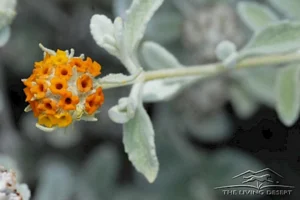
Species Name:Buddleia marrubifolia
Read MoreScrophulariaceae, Figwort Family
Southwestern Texas and northern Mexico
Canyons, arroyos and slopes
Shrub
Chihuahua Garden, MacDonald Butterfly Garden
Butterflies like wooly butterfly bush…people do too!
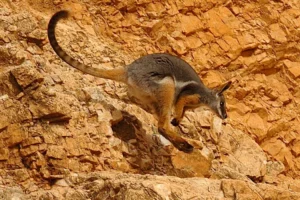
Species Name:Petrogale xanthopus
The yellow-footed rock wallaby lives among rocky cliffs, faces, gorges, and boulder fields. It is mainly nocturnal, sheltering in small caves, cracks, and crevices during the heat of the day. Yellow-footed…
Read MoreMacropodidae
Near threatened
Queensland, New South Wales, South Australia
Rocky outcrops in semi-arid areas
Yellow-footed rock wallabies are threatened by predation by foxes and feral cats, habitat fragmentation, wildfires, and drought due to climate change.
The yellow-footed rock wallaby lives among rocky cliffs, faces, gorges, and boulder fields. It is mainly nocturnal, sheltering in small caves, cracks, and crevices during the heat of the day.
Yellow-footed rock wallabies can jump up to 12 feet. They have strong back legs and long tails, which counterbalance as they dart among the steep slopes.
Also known as ring-tailed wallabies, the soles of their feet are rough and surrounded by coarse hair, helping them to increase traction and get a firm grip on the rocks. They can be identified from other wallaby species by their distinctive pattern of yellow and brown rings on their long tails.