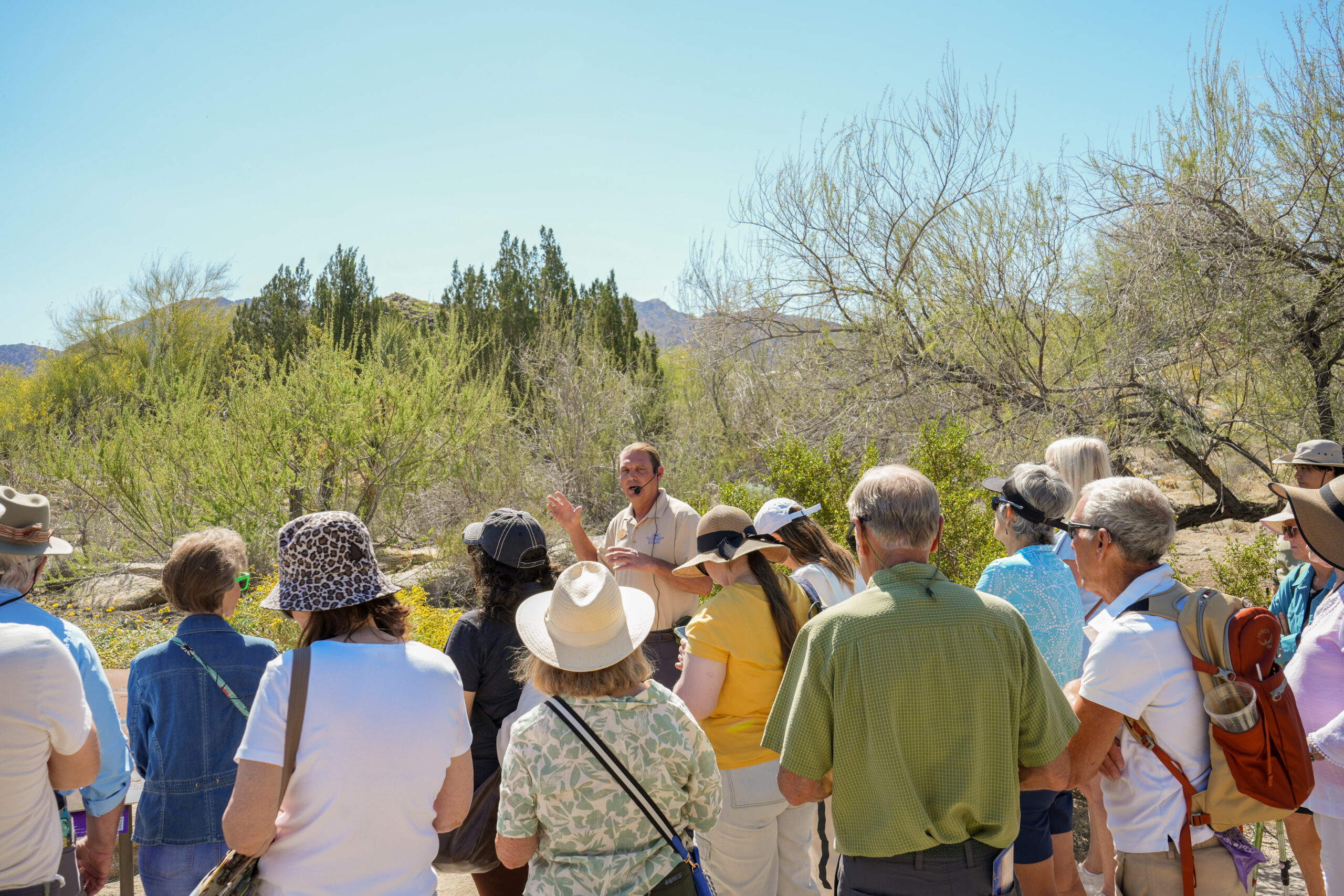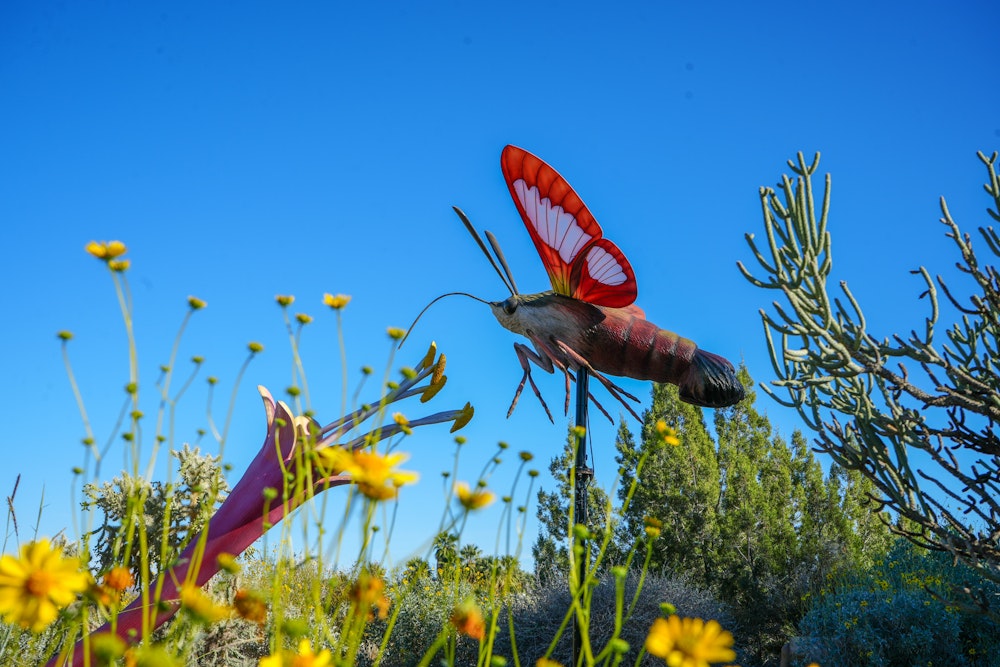

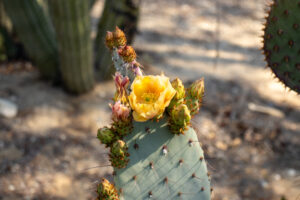
Explore the Foothills of Sonora Garden where the Sonoran Desert and tropical deciduous forest meet. This unique environment is where plants co-exist at either their southern limits or northern limits due…
Read MoreExplore the Foothills of Sonora Garden where the Sonoran Desert and tropical deciduous forest meet. This unique environment is where plants co-exist at either their southern limits or northern limits due to rainfall and/or temperature, comingling in a mosaic of succulents and arborescent cacti and short tree forest. Also, the home of our jaguar habitat.
Species Name:Giraffa camelopardalis reticulata
Giraffe spend much of their day eating leaves, buds and twigs, especially from acacia trees. Surprisingly, giraffe only need 530 minutes of sleep per day. Giraffe are threatened by habitat loss,…
Read MoreBovidae, the cow and goat family.
Vulnerable.
Southern Africa, East Africa, and isolated populations in the Sahel.
Savannah.
Affectionately known as the ‘Watchtowers of the Savannah’ because coexisting species look to the giraffe as indicators of safety.
Giraffe spend much of their day eating leaves, buds and twigs, especially from acacia trees.
Surprisingly, giraffe only need 530 minutes of sleep per day.
Giraffe are threatened by habitat loss, civil unrest, poaching and ecological changes. The Living Desert actively supports conservation education programs in Tanzania. Learn more about our conservation efforts.
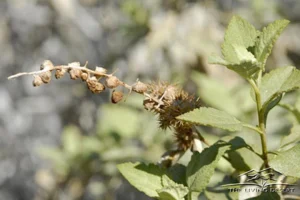
Species Name:Ambrosia chenopodifolia
Read MoreAsteraceae, Sunflower Family
Baja California and Coastal Sonora, Mexico
Hillsides, slopes, plains and mesas
Shrub
Vizcaino Garden
Check under a Goosefoot Bursage, it just might be a nurse plant.
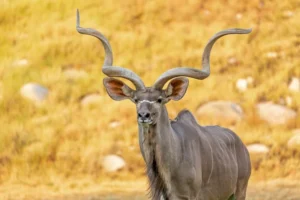
Species Name:Tragelaphus strepsiceros
This antelope is easily distinguished by the male’s spectacular spiral horns, and the six to ten thin pale stripes against its tawny-brown to grey-brown body. Female greater kudus are smaller than…
Read MoreBovidae, the cow and gazelle family
Low risk, IUCN
East and southern Africa
Woodlands, scrub, and open forests up to 8,000 feet
Africa’s second largest antelope.
This antelope is easily distinguished by the male’s spectacular spiral horns, and the six to ten thin pale stripes against its tawny-brown to grey-brown body. Female greater kudus are smaller than males, and lack the impressive horns. The coat color of the females is also different, varying from sandy yellowish-grey to russet, against which the thin stripes are conspicuous. Both sexes have a crest of hair that runs along the middle of the back and forms a mane, and there is a distinct white band across the face between the eyes. Their large, rounded ears give a slightly comical appearance.
They are shy and their large ears are extremely sensitive to noise. If they can they will move away from potential predators but if they have to flee they do so with large jumps. Despite their bulky size, greater kudus are remarkably agile and are surprisingly adept at jumping.
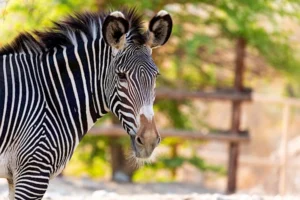
Species Name:Equus grevyi
They are horse-like with big, rounded ears, a long, narrow head with very narrow and numerous black stripes on body and legs, but not the belly or around the base of…
Read MoreEquidae, the horse family
Endangered, IUCN.
East Africa; Northern Kenya, Somalia and eastern Ethiopia.
Dry savanna country.
It is widely believed that this zebra was the famed “Hippotigris” (horse-tiger) of the Roman circus. The first specimens known to the scientific world were named for President Grevy of France, so although the species may have been new to science, it was known to earlier Europeans.
They are horse-like with big, rounded ears, a long, narrow head with very narrow and numerous black stripes on body and legs, but not the belly or around the base of the tail. Grevy‘s zebras are the largest of all wild equids.
Grevy’s don’t form herds like other equines; instead one male defends a small territory with a watering hole. Females who wander into the territory mate solely with the resident male. One foal is born after a gestation period of approximately 13 months, usually between May and August, although they can breed all year. The foal has brown stripes and a mane which stretches from shoulder to tail, and can stand on its feet within one hour of birth, running with the herd after only a few hours. They reach independence from the mare sooner than other equids. Grevy’s eat mainly grass and spend most of the daylight hours grazing. They prefer tender shoots but usually have to eat coarser grass. Leaves, bark, buds and fruit are also eaten. Their predators are primarily lions and African wild dogs.

Species Name:Urocyon littoralis
The smallest North American canid found only on California’s Channel Islands is a descendant of the mainland gray fox (Urocyon cinereoargenteus), the island fox evolved into a unique species over 7,000…
Read MoreCanidae, dog and coyote family
The IUCN lists this species as Near Threatened, an improvement from its previous status of “Critically Endangered”. The Living Desert has helped in this recovery. We were involved in establishing and monitoring ex situ island populations while threats to the wild population were ameliorated. We also provided captive husbandry expertise and participation on the federal recovery team.
The Channel Islands off the coast of southern California. There are six distinct subspecies which are recognized, one on each of the islands where they occur. Each island fox population is recognized as a separate endemic or unique subspecies.
All habitats on the islands, including valley and foothill grasslands, coastal sage scrub, sand dunes, island chaparral, coastal oak and pine forests, and marshes.
The smallest North American canid found only on California’s Channel Islands is a descendant of the mainland gray fox (Urocyon cinereoargenteus), the island fox evolved into a unique species over 7,000 years ago, retaining similar markings to its ancestor but evolving to be just two-thirds of the size. The coat of the island fox is a grizzled mix of greyish-white and black, while the underside is a dull white. The ears, neck and the sides of the legs are usually cinnamon- colored and the chin, borders of the lips and the area between the eyes and nose are black. The tail has a well-defined, black, narrow stripe along the top.
Island foxes are thought to have evolved in the three largest northern Channel Islands and were moved to the three largest southern Channel Islands by the Chumash native people who traded with the Gabrielino people of the southern islands. The Chumash considered the fox to be a sacred animal–a pet of the sun, and possibly a dream helper. The Island Chumash performed a fox dance and probably used the pelts of foxes to make articles like arrow quivers, capes, and headdresses.
In the 12 years (2004 -2016) since it was listed as an endangered species quick and effective actions have taken place to facilitate their recovery. The key efforts which contributed to this recovery included: captive breeding and reintroduction of island foxes, capture and relocation of golden eagles, vaccination of foxes against distemper, and larger ecosystem recovery actions of bald eagle restoration and nonnative ungulate removal (pigs, deer and elk).
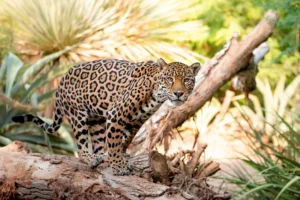
Species Name:Panthera onca
Jaguars come in many sizes and colors with spots on the head, neck and legs, and rosettes on the rest of the body. The overall coat of a jaguar is typically…
Read MoreFelidae, the cat family
Endangered, USF&W Near threatened, IUCN
Arizona, New Mexico, Texas and from Mexico all the way down to Patagonia.
Forest, swamps, grasslands and mountainous areas.
Jaguars are the largest cats in the Americas and the only representative of the genus Panthera
Jaguars come in many sizes and colors with spots on the head, neck and legs, and rosettes on the rest of the body. The overall coat of a jaguar is typically pale yellow, tan, or reddish yellow above, and generally whitish on the throat, belly, insides of the limbs, and underside of the tail, with prominent dark spots or blotches throughout. Each jaguar’s marking are different, just like our fingerprints. Adults weigh on average 80-250 lbs. They measure about 30 inches at the shoulder and are about six feet long plus a 30-inch tail. Jaguars have a relatively robust head, compact but muscular body, short limbs and tail, and powerfully-built chest and forelegs. Its skin color and patterned coat aid in camouflage. Its long tail helps it balance when running and turning sharply. Jaguars have a large head specially equipped for piercing the skull of their prey with their canines.