Today’s Hours: 8:00am – 5:00pm


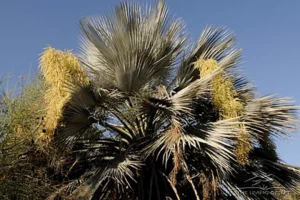
Species Name:Brahea armata
Read MoreArecaceae, Palm Family
Baja California, Mexico
Canyon bottoms and arroyos
Tree
Vizcaino Garden, Palm Garden
Some specimens exhibit exceedingly vibrant blue-gray leaves.
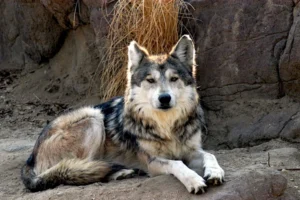
Species Name:Canis lupus baileyi
Mexican wolves have a complex social structure and communication system, which includes vocalizations, facial expressions, scent marking and body language. Their body language is essential in identifying the dominant male. The…
Read MoreCanidae, the dog family
Endangered
Southwestern United States and Mexico.
Arid grasslands, woodlands and forests
Mexican wolves have a complex social structure and communication system, which includes vocalizations, facial expressions, scent marketing and body language.
Mexican wolves have a complex social structure and communication system, which includes vocalizations, facial expressions, scent marking and body language.
Their body language is essential in identifying the dominant male. The alpha will stand tall with their tail held high, while other wolves will exhibit a submissive behavior with a lower body and tail.
Through cooperative hunting and precise communication, packs can bring down prey animals usually much larger than themselves by chasing them over long distances and creating confusion.
The Mexican wolf’s major threats are human-caused mortality, loss of gene diversity, and loss of habitat. The Living Desert has played an instrumental role in the comeback of the Mexican wolf for decades.

These two gardens represent our own local desert environs and the opportunity to discover more about what's in your own backyard. The Mojave Desert Garden replicates our high desert with the…
Read MoreThese two gardens represent our own local desert environs and the opportunity to discover more about what’s in your own backyard. The Mojave Desert Garden replicates our high desert with the iconic Joshua tree and its cohabitants including desert tortoises. And the Upper Colorado Desert Garden replicates the western edge of our subdivision of the Sonoran Desert near the Santa Rosa Mountains and along the eastern slopes of the Peninsular Ranges where chaparral transitions into desert.
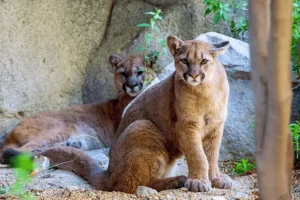
Species Name:Puma concolor
The Mountain Lion is a large, low-slung sandy-colored cat with a small head and a long, heavy rope-like tail. The tail makes up nearly half of the total 6–8-foot length. Males…
Read MoreFelidae, cat family
Least concern, IUCN
Historically – Coast to Coast in North America and from southern Argentina to south eastern Alaska. Currently – Extirpated from most of eastern North America
Wide variety of habitats including montane coniferous forests, lowland tropical forests, grassland, dry brush country, swamps
Despite its size, it is more closely related to the small cats, and like them, purrs (due to an ossified hyoid bone in the throat) and cannot roar.
The Mountain Lion is a large, low-slung sandy-colored cat with a small head and a long, heavy rope-like tail. The tail makes up nearly half of the total 6–8-foot length. Males weigh from 100 to 200 pounds; females weigh from 80 to 110 pounds. The tail is long, cylindrical, and about one-third of the animal’s total length. The limbs are short and muscular.
The mountain lion prefers deer, which it captures by stealth, stalking and pouncing upon its prey. A mountain lion must kill to survive, and it is well-equipped to do so. Forward-pointing eyes give it superb binocular vision. A heavily muscled body enables rapid bursts of blinding speed, and huge leaps and razor-sharp claws grip its victim during attack. Powerful jaws with sharp canine teeth bite the neck, severing the spinal cord, and blade-like carnassial teeth slice through hide and flesh. After gorging on its kill, a mountain lion will cover the remains with leaves and debris, returning in a day or two to feed again, then move on and may not kill again for 10 to 14 days. A mountain lion will take elk if they are available, but when large prey is scarce, it will eat anything it can catch: raccoons, porcupines, squirrels, rabbits, foxes and even skunks.
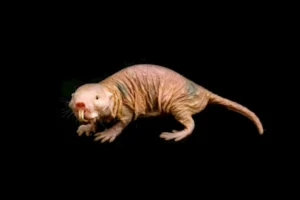
Species Name:Heterocephalus glaber
Banded Mongoose are highly social creatures, forming close-knit groups, and showcasing strong community bonds. They have a diverse diet and are known for their distinctive dark bands contrasting their golden-brown backs…
Read MoreHeterocephalidae
Least Concern
Eastern Africa, Ethiopia, Kenya, Somalia
Underground burrows and tunnels in grassy, semi-arid regions Diet: Roots and bulbs
Naked mole rats live exclusively underground in subterranean burrows that are 1.5” in diameter and can be up to 6.5’ deep. Their burrows feature interconnecting tunnels and special chambers used for specific purposes, including food storage and raising young. Virtually blind and hairless, naked mole rats are a member of the rodent family that have exceptionally long-life spans of around 25 years old. They rely on their sense of smell, touch and hearing to navigate in the dark. Naked mole rat colonies are led by one queen, who mates with only a few of the colony’s males. Incredibly, these relationships can last for years. The rest of the colony are known as “workers” and support the queen. Threats: Predators include cheetah and wild dogs.
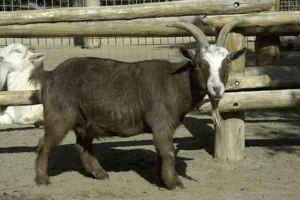
Species Name:Capra hircus
Nigerian dwarf goats are a West-African breed that has been domesticated and is now found worldwide. They come in a variety of colors and color combinations in black, white, chocolate, red,…
Read MoreBovidae, the cow and gazelle family.
Domestic goat breed.
Originated in West Africa but is now domesticated worldwide.
Wooded pastures and domestic farmland.
Nigerian dwarf goats are popular as pets and family milkers due to their easy maintenance and small stature.
Nigerian dwarf goats are a West-African breed that has been domesticated and is now found worldwide. They come in a variety of colors and color combinations in black, white, chocolate, red, and gold. Their nose is fairly straight with upright ears and a short to medium length coat. Nigerian dwarf goats stand anywhere from one to two feet tall at the shoulder and can weigh 60-80 pounds.
Nigerian dwarf goats are a dairy goat that can produce a large amount of milk for their size. On average they produce two and a half pounds of milk per day during their lactation period.
Female goats are fertile year round and can have one to six kids, two being the usual, number. Kids are approximately two pounds at birth and grow very quickly.
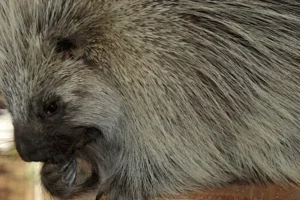
Species Name:bb-na-porcupine
The North American porcupine is the second largest of all rodents in North America. It has a small head, a large, chunky body with a high arching back and short legs.…
Read MoreErethizontidae, new world porcupine family
Least concern, IUCN
United States, Canada and northern Mexico
Broad variety from open tundra, deciduous forests, and desert chaparral
The North American porcupine is a good swimmer, its hollow quills help keep it afloat.
The North American porcupine is the second largest of all rodents in North America. It has a small head, a large, chunky body with a high arching back and short legs. Its head and body are 25” to 40” long, with a long, thick, muscular tail growing as long as 8”. It weighs from 10-40 lbs. Long, yellowish guard hairs cover the front half of its body while up to 30,000 quills are interspersed among the dark, coarse guard hairs of the back and tail. The porcupine’s feet have 4 toes on the forefeet and 5 on the hind feet, all with long, curved claws and small textured knobby pads on the bottom.
Entirely vegetarian, they eat evergreen needles, tree bark, buds, tender twigs, roots, stems, leaves, flowers, berries, nuts, and other vegetation. Porcupines are also known to gnaw on bones and antlers from the ground due to their high mineral content. The two large, front gnawing teeth continue to grow as long as the porcupine lives.
When threatened, the North American porcupine places his snout between his forelegs and spins around presenting its rear to the enemy. If attacked, contrary to popular belief, the porcupine does not throw its quills; instead, it drives its tail against the assailant and dozens of quills detach easily from the skin to remain embedded in the attacker. If hit in the face, a predator such as the wolf, bobcat or mountain lion may die of starvation when they find it impossible to remove the quills and are thus unable to eat.
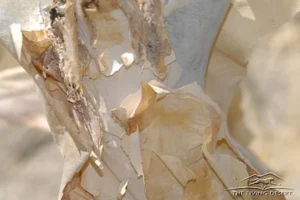
Species Name:Acacia willardiana
Read MoreFabaceae, Pea Family
Western Sonora and northwestern Sinaloa, Mexico
Rocky bajadas, slopes and arroyos from 0 to 2,000 feet elevation; Sonoran desertscrub and thornscrub
Tree 15 feet to 20 feet tall, 10 feet to 15 feet wide
Chase Administration, Foothills of Sonora Garden
One of palo blanco’s many attributes is its light colored, paper-like exfoliating bark.
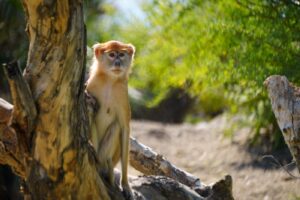
Species Name:Patas Monkey
Read MoreErythrocebus patas
Near Threatened
Central Africa, East Africa
Forest, Savanna, Shrubland
Patas monkeys rely on their speed to hunt for food and water and to escape predators. As the fastest primate in the world, they can run up to 34 mph.