
Building Community Conservation Success in Zimbabwe: Best Teaching Experience Ever.
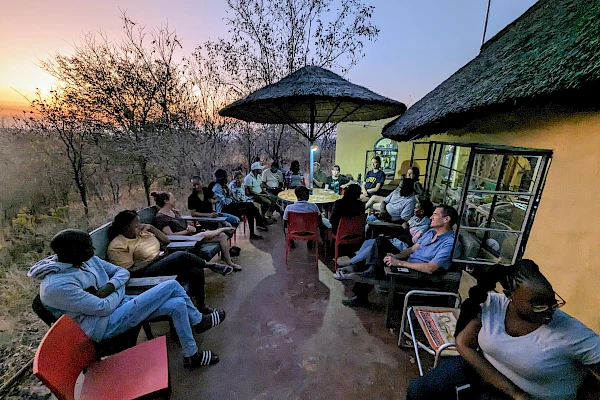
Well! We just finished up the first of our three Building Community Conservation Success social science workshops here in Sizinda, Zimbabwe, near Victoria Falls and I am charged up! I have been teaching in a WIDE diversity of settings, locations, topics, and languages for over 30 years at this point, and I think I can say that this class was my best teaching experience ever! Awesome students, fantastic colleagues, excellent co-instructor (Katie Shaw, Conservation Social Scientist at The Living Desert), and lovely rustic field setting — all have combined to provide a rush akin to the best runner’s high that I have ever experienced!
Our class here, hosted by the Painted Dog Research Trust (PDRT), had 28 participants in total. Folks came from universities (University of Namibia (UNAM), Augustana College in the US), federal agencies (Zimbabwe Republic Police, National Prosecuting Authority of Zimbabwe, and Zimbabwe Parks), non-profits (Painted Dog Research Trust, Sacramento Zoo), and for-profit businesses (Matetsi River Lodge and Matetsi Game Reserve). Quite a wide range of training, experiences, interests, and approaches to conservation.
Building Community Conservation Success in Zimbabwe
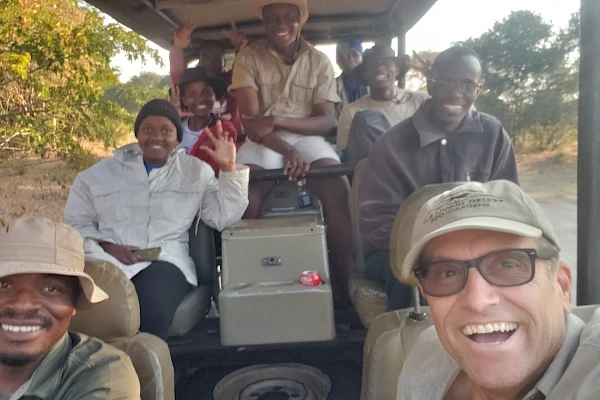
Ah! It’s so good to be back! After what eventually became almost four years of COVID-related delays, I am finally able to resume what I think of as my most important professional accomplishment! It’s the best thing that I have ever created, and how I can have the greatest impact on global conservation – our Building Community Conservation Success (BCCS) social science training workshops.
I am here in Zimbabwe with Katie Shaw (Conservation Social Scientist at The Living Desert) to lead three BCCS workshops for different groups of African conservation biologists and their colleagues. I first created BCCS in 2018 while working with my friends at the Applied Environmental Research Foundation (AERF) in Pune, India for almost two months. I received my first Fulbright Specialist award from the US State Department to help share my academic expertise and scientific skills with the leading-edge conservationists at AERF. They inspired me to create a cohesive course that would enable conservation biologists to better work with communities. The BCCS social science training workshop was the result of my time with AERF.
An Effective Pairing to Promote Caring for Wildlife: Bush Babies and Black Mambas
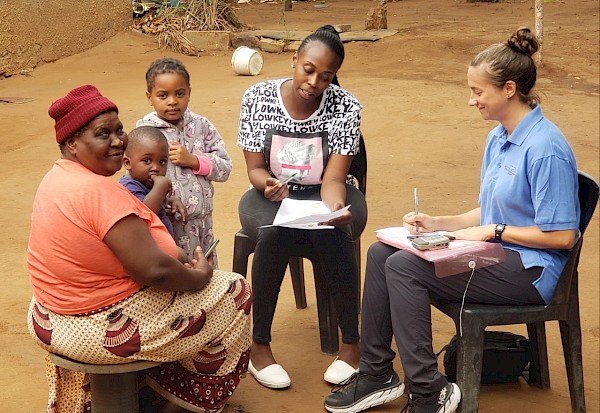
What a marvelous day! Today was our fifth day of conducting interviews in the communities surrounding the Balule Game Reserve in South Africa, on the border with Kruger National Park. Having the honor of speaking with (now 79!) people about their thoughts about conservation, wildlife, and protected areas is my favorite research project I have done. People often talk about African hospitality being wonderful. However, until you walk through the streets of these poor communities and have someone welcome you into their yard immediately and offer you their best chair, even before you say why you are there, is kindness embodied. This has been the case in every one of the four communities in which we have begun to work.
Balule is where the Black Mambas Anti-Poaching Unit (BMAPU) works to prevent illegal hunting. In the Game Reserve, they have reduced poaching by almost 90% since they began working here, a massive accomplishment. Katie Shaw, one of The Living Desert’s Conservation Social Scientists, and myself are here for a month to conduct a follow-up study to one that I did five years ago to assess the social impact of the BMAPU on these neighboring communities. The BMAPU was founded with two main goals: to reduce poaching and to address it’s cause at the roots by reducing the support for poaching in communities by increasing appreciation for wildlife and conservation more broadly. This latter bit is what we are assessing here.
Black-Footed Cat Kitten Recovery
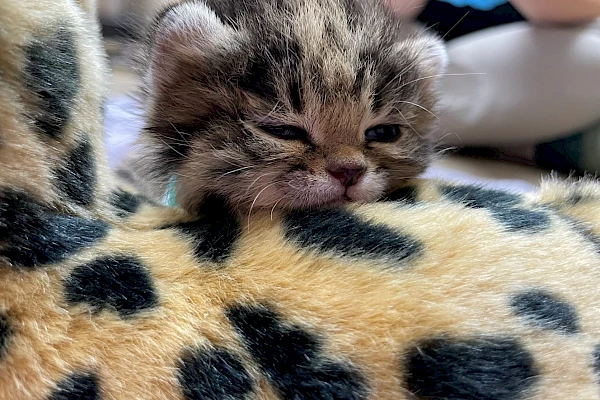
On April 8, the animal care team at The Living Desert quietly celebrated the historic birth of a black-footed cat kitten at the zoo’s Desert Carnivore Conservation Center. Born to first time mother, Tad, the kitten was growing, nursing, and bonding with her mother in their behind-the-scenes habitat. This is the first black-footed cat kitten to be born at The Living Desert in over 20 years and is a significant birth for the endangered species – this was the only black-footed cat birth in human care this year.
As with most carnivore births, the animal care team remained hands-off during the birth and early neonate period to ensure the offspring successfully bonded with its mother. The animal care team followed a strict supervisory schedule, completing once daily visual checks to ensure the kitten and mother were healthy and bonding.